
AI image generators promised to revolutionize creative work. Instead, they created more headaches than solutions.
When ChatGPT first appeared, I wondered if my writing career was toast. Artists felt the same panic as AI-generated images kept improving. But here’s the thing: I still fire up Photoshop every single day. Moreover, I rarely touch AI for serious work anymore.
Generative AI looks impressive in demos. But in real-world projects? It falls short. Way short. In fact, my basic Photoshop skills outperform AI most of the time. That’s not bragging—it’s just reality.
When AI Actually Works
Let me be clear: AI isn’t completely useless. It handles specific tasks pretty well.
I use AI for quick mockups and concept art. Need a fake sci-fi interface for a tabletop RPG? AI nails it. Want to fill gaps in photos or expand an image slightly? Photoshop’s Generative Fill works great as a healing brush alternative.
AI shines for throwaway content. Game prototypes? Sure. Personal memes? Absolutely. Character portraits for roleplaying? Sometimes.
But that’s where its usefulness ends for me. I don’t generate sprawling landscapes or elaborate artwork. Why would I? Those images might look technically impressive. But they’re useless for my actual needs.
Plus, AI lacks accuracy, precision, and the ability to follow specific instructions. It still feels like a tech demo. That makes it ineffective beyond novelty uses.
Where AI Completely Falls Apart
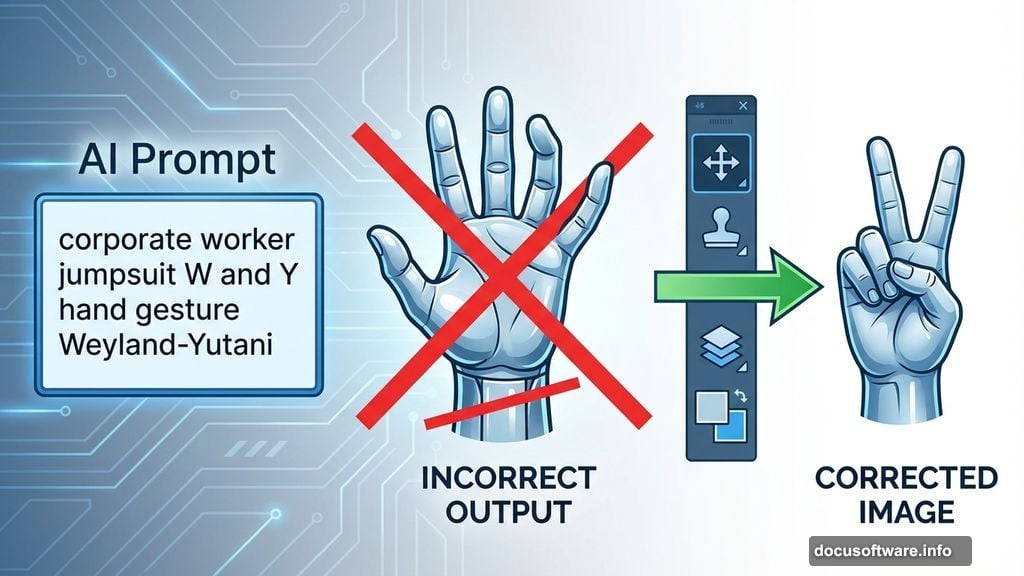
Here’s a perfect example of AI’s limitations. I needed a character portrait for an Alien RPG game. Simple request: a corporate worker in a jumpsuit making “W” and “Y” hand shapes to represent Weyland-Yutani Corporation.
Could AI handle it? Not even close.
I tried over 10 different prompts. I specified three fingers up on one hand, two on the other, splayed to form letters. The results? Hands facing wrong directions. Incorrect finger counts. Never the right gesture. Complete failure.
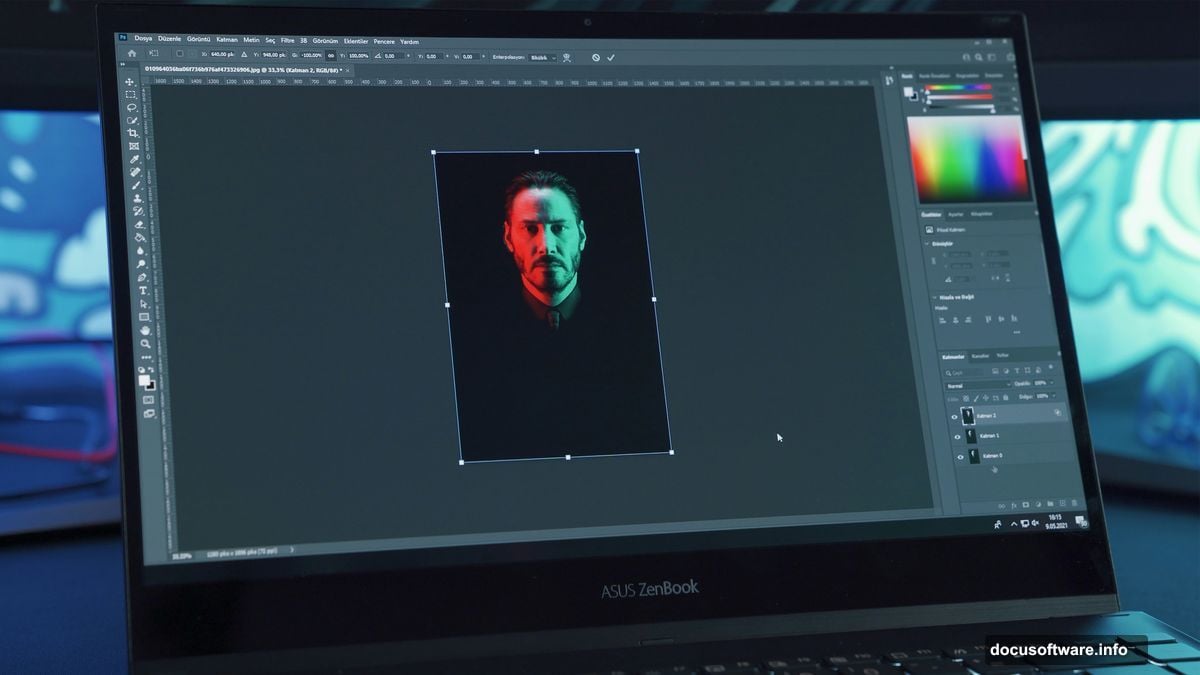
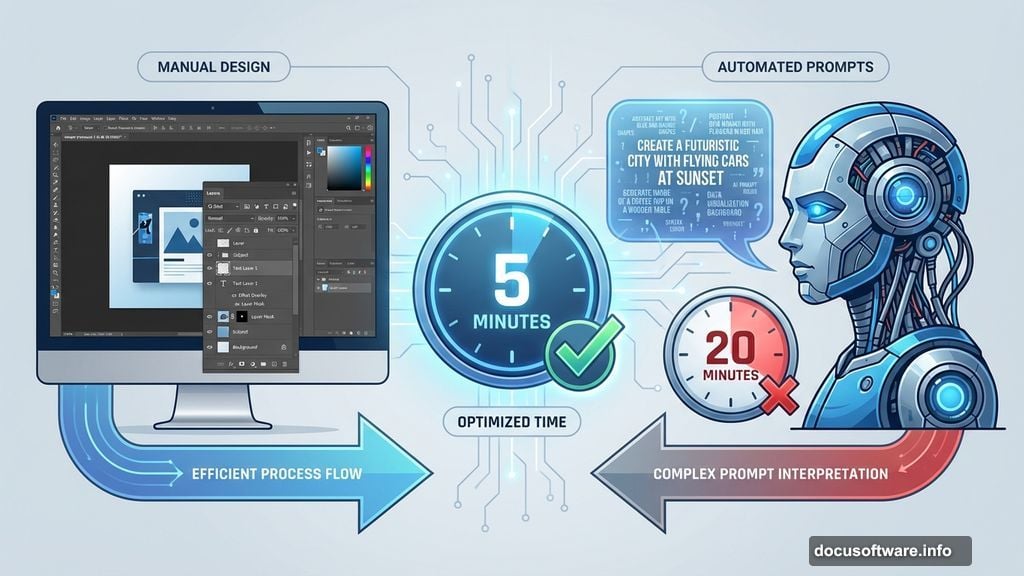
After 20 minutes of frustration, I gave up. Instead, I grabbed the first AI image, cloned a finger, repositioned it, adjusted lighting, and blended layers. Total time? Five minutes. The result looked perfect.
So yes, AI gave me a starting point. But it couldn’t deliver a usable final product. That initial image was no better than a random photo from the internet.
Manual Work Is Still Faster
This happens constantly. AI takes longer to prompt correctly than doing the work myself.
Think about the process: I craft detailed prompts. Then I hope AI interprets them correctly. Usually it doesn’t. Sometimes it changes the art style randomly. Other times it fixes one problem but breaks something else.
Meanwhile, manual edits take seconds. Recent proof? The Coca-Cola Christmas ad disaster. They spent more money on AI than traditional animation would’ve cost. Then they hired real animators anyway because AI results looked terrible.
For individuals without Photoshop skills, AI might get you halfway there. But we’re nowhere near the point where manual work becomes obsolete. Not even close.
The Everyday Tasks AI Can’t Beat
Here are quick edits I do constantly that AI can’t match:
Resizing images? Takes me two seconds in Photoshop. Adjusting lighting and contrast? Instant. Reframing photos? Easy. Converting file types? Click and done. Changing aspect ratios? No problem.
I handle these tasks daily. There’s no way I’m trusting unreliable AI to do them correctly. Plus, why waste GPU power, electricity, and water on something I do faster myself?
Yes, generative AI’s environmental costs are frighteningly high. Running these models consumes massive resources. For tasks I complete in seconds? That’s wasteful and unnecessary.
Finding the Right Balance
Look, I’m not anti-AI. I don’t want the technology to die. I see potential future uses.
But we need to be mindful about when and how we use it. Generative AI makes no sense for anything I can do myself—especially if I do it better, faster, and with less frustration.
AI works great for fun stuff. I generate images and videos for friends. I create inspiration for roleplaying sessions. I make quick concepts for creative projects. Placeholder art for game designs? AI excels there.
But for critical work? Anything demanding specificity? Anything with real consequences? I do it myself.
AI won’t follow instructions reliably. It injects hallucinations and mistakes. If AI makes my life harder instead of easier, why bother?
Maybe in 10 or 20 years, generative AI will match what I do now. Some predict a post-work world. But current LLMs won’t make that happen. They’re useful tools with serious limitations. Nothing more, nothing less.
For now, my Photoshop skills still matter. And honestly? That’s perfectly fine with me.